
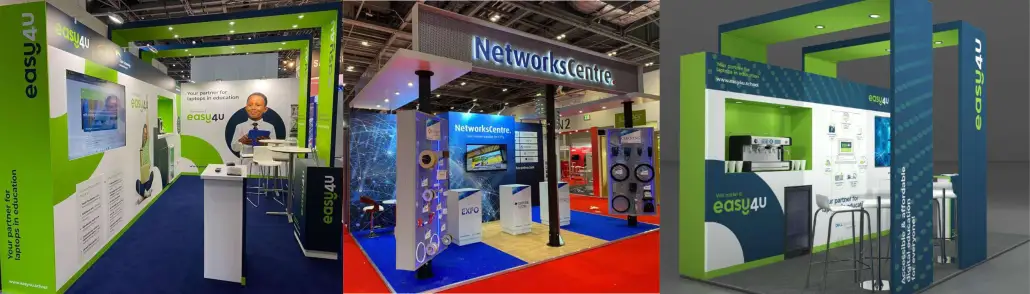
What are Exhibition Stands?
Exhibition stands are the physical structures or setups used by businesses to showcase their products, services or brand identity at trade shows, conferences and other events. In essence, an exhibition stand is more than just a display; it is a strategic marketing tool designed to attract attention, engage visitors and create memorable interactions.
For businesses looking to establish or reinforce their presence in their industry, the exhibition stand serves as both a visual and functional representation of the brand.
What you will learn in this blog post:
- Exhibition stands showcase a brand and attract visitors at trade shows.
- Key types include modular, custom, portable and rental stands.
- Shell scheme stands offer an affordable, ready-made structure for exhibitors.
- A strong exhibition stand boosts visibility, engagement and ROI.
- Success depends on good design, clear messaging, trained staff and solid follow-up.
An effective exhibition stand not only communicates the brand’s message clearly but also encourages interaction and provides a platform for meaningful connections with potential clients, partners and stakeholders. The design, layout and presentation of the stand can significantly influence visitor perceptions, making it a critical element in any event marketing strategy.
Understanding the types of stands, their advantages and the nuances between similar concepts such as booths can help businesses make informed decisions and maximise the return on their investment.
In this blog, we will explore the various types of exhibition stands, take a closer look at shell scheme stands and explain why exhibition stands are an essential component of successful event participation.

Types of Exhibition Stands
Exhibition stands come in a variety of formats, each tailored to different objectives, budgets and space constraints. Choosing the right type of stand is essential for ensuring that your presence at an event is effective and memorable. Broadly, exhibition stands can be categorised into modular, custom, portable and rental options.
Modular Stands
Modular stands are constructed using pre-fabricated components that can be assembled and reconfigured to suit different event spaces. These stands are highly versatile, allowing businesses to adapt layouts according to the floor plan or the scale of the exhibition.
Modular stands offer a balance between cost-efficiency and visual appeal, making them suitable for companies that participate in multiple exhibitions throughout the year. They also allow for upgrades or modifications, such as adding digital screens or bespoke branded panels, without the need for a complete rebuild.
Custom or Bespoke Stands
Custom exhibition stands are designed and built specifically for a brand’s requirements. They offer maximum flexibility in terms of layout, materials and design features, allowing for a truly unique presentation. While custom stands tend to be more expensive than modular or portable options, they provide a high level of impact, helping brands stand out in competitive environments.
These stands are ideal for companies looking to make a strong visual statement or showcase complex products and services that require specialised displays.
Portable or Pop-up Stands
Portable stands are lightweight, compact and designed for easy transportation and assembly. Pop-up stands, for instance, can be quickly set up and are often used for smaller exhibitions, regional events, or promotional activities. While they offer convenience and affordability, they may not provide the same level of visual impact as custom or modular stands. Portable stands are particularly suitable for businesses with limited budgets or those testing new markets where frequent travel is required.
Stand Rental vs Ownership
Some businesses opt to rent exhibition stands rather than purchase them outright. Renting can be a cost-effective solution, particularly for companies participating in one-off or infrequent events. Rental stands are typically modular or portable and the rental company often provides assembly, installation and dismantling services.
Ownership, on the other hand, is preferable for businesses that attend multiple events annually and require a consistent, branded presence. Choosing between rental and ownership depends on factors such as budget, frequency of events and the desired level of customisation.
When selecting a stand type, businesses must consider practical elements such as the allocated floor space, the expected number of visitors, transport logistics and the overall brand message. The ultimate goal is to create a stand that is visually appealing, functional and conducive to meaningful interactions with visitors.

Shell Scheme Stands
A shell scheme stand is one of the most common types of exhibition stands, particularly in the UK. Essentially, a shell scheme provides a pre-constructed framework of panels, typically with a white Foamex finish, which can be customised with graphics, signage and lighting.
The simplicity of the shell scheme makes it a practical choice for exhibitors who want a professional-looking display without the complexity or cost of a full custom stand.
Structure and Components
A typical shell scheme includes aluminium framing, wall panels, a fascia panel displaying the company name and often basic lighting and carpeted flooring. Some packages may also include power sockets, furniture or display cabinets.
The modular nature of shell schemes allows exhibitors to add elements such as printed graphics, banners, or digital screens to enhance the visual appeal.
Advantages
Shell scheme stands offer several advantages. Firstly, they are cost-effective, providing a ready-made structure that reduces setup time and design expenses. They are also highly practical for smaller businesses or first-time exhibitors, as they require minimal technical knowledge to assemble and maintain.
Furthermore, because the components are standardised, shell schemes are compatible with a wide range of exhibition venues and floor plans.
Disadvantages
Despite their benefits, shell scheme stands do have limitations. The uniformity of the structure can restrict creative design options, making it harder for a brand to differentiate itself visually. Additionally, the pre-fabricated panels may limit the flexibility of layout and the basic design may not convey a high-end or premium brand image.
Best Use Cases
Shell scheme stands are ideal for smaller exhibitors, budget-conscious businesses and companies participating in multiple events with standard booth sizes. They provide a professional, functional platform while allowing for some level of personalisation through graphics and branding. For brands seeking to make a bold statement, shell schemes can be enhanced with ‘Shell-Clad’ graphics or custom elements such as display units, lighting effects and interactive technology.
Why is an Exhibition Stand Important?
The importance of an exhibition stand extends far beyond mere aesthetics. It is a vital tool in achieving marketing objectives, building brand recognition and generating business opportunities.
First Impressions and Brand Visibility
An exhibition stand often forms the first impression of a brand for visitors. A well-designed stand conveys professionalism, quality and credibility. It ensures that the brand stands out in a crowded exhibition hall and attracts the right audience. Effective use of colour, lighting, graphics and layout can create an inviting space that encourages visitors to stop, explore and engage.
Engagement and Interaction
Exhibition stands provide a platform for direct interaction with potential clients, partners and stakeholders. Unlike digital marketing channels, the physical presence allows for personalised communication, live demonstrations and real-time feedback. Staffed by knowledgeable representatives, a stand can answer questions, provide samples, or showcase products in a way that leaves a lasting impression.
Competitive Advantage
In industries where competition is fierce, a strategically designed stand can differentiate a brand from its rivals. The layout, design and features of the stand can communicate a unique selling proposition, highlight innovation and reinforce brand identity. A strong presence can attract media attention, industry recognition and referrals from other exhibitors.
Return on Investment
An exhibition stand represents a tangible investment in marketing. While the initial cost may be significant, the potential returns in terms of leads, sales and partnerships can far exceed the expenditure. By measuring visitor engagement, tracking leads and following up effectively after the event, businesses can maximise the impact of their stand and justify the investment.
Psychological and Experiential Impact
Beyond functional benefits, exhibition stands influence visitor perception and experience. The environment created by the stand—through design, lighting and interactivity—can evoke emotions, build trust and enhance brand recall. A thoughtfully designed stand transforms a routine exhibition visit into an engaging and memorable experience, increasing the likelihood of future engagement.
Best Practices for Exhibition Stands
To fully leverage the potential of an exhibition stand, certain best practices should be followed:
Design Matters: Prioritise a clean, coherent layout with strong branding, clear signage and effective lighting. Avoid clutter and ensure that key messages are immediately visible.
Clear Messaging: Communicate the brand’s value proposition succinctly. Visitors should understand what the company offers within seconds of approaching the stand.
Engaged Staff: Well-trained staff are essential. They should be approachable, knowledgeable and proactive in engaging visitors.
Logistics Planning: Consider transport, assembly and dismantling carefully to avoid last-minute issues. Timing and setup efficiency contribute to a smooth event experience.
Follow-Up: Capturing visitor information, tracking leads and conducting post-event follow-up ensures that the stand delivers measurable business outcomes.
Conclusion
Exhibition stands are more than just physical structures; they are strategic marketing tools that enable businesses to showcase their brand, engage visitors and achieve measurable objectives at trade shows and events. From the versatility of modular and portable stands to the practicality of shell schemes, understanding the types and their applications is essential for effective event participation.
Ultimately, the importance of an exhibition stand lies in it’s ability to create a strong first impression, foster interaction, provide a competitive edge and deliver tangible returns on investment.
For any business seeking to maximise its presence at exhibitions, careful planning, thoughtful design and strategic execution of the stand are key. By investing in an effective exhibition stand, companies can ensure that their brand is not only seen but also remembered, engaged with and valued.
Over 20 years of passionately providing quality exhibition and display solutions to clients throughout the UK.

Steve Powell
Tel: 01444 246546
Mob: 07814 011586
https://freshdisplay.co.uk
sales@freshdisplay.co.uk


Leave a Reply
Want to join the discussion?Feel free to contribute!